
Counterfeit GLP-1 Medications in Metairie: How to Know What You’re Really Taking
GLP-1 medications have changed the way we treat obesity and metabolic disease. They have also created a fast-growing market filled with online advertisements, low-cost offers and companies promising medication with very little interaction with a medical provider.
Convenience is not necessarily a problem. Virtual care can be excellent medical care when it includes a proper evaluation, responsible prescribing and accessible follow-up. The problem is when convenience removes the safeguards that make prescription treatment safe.
A recent case here in Metairie brought that distinction uncomfortably close to home.
According to an August 26, 2026, FOX 8 report, Jefferson Parish investigators uncovered an alleged home laboratory containing more than $1 million in substances. Authorities reported finding anabolic steroids, peptides, unregulated prescription drugs and counterfeit GLP-1 weight-loss medications. Investigators said raw chemical powders were allegedly mixed with liquids and other substances inside the home before being repackaged for resale.
That report should not create panic, and it does not mean every online or compounded prescription is counterfeit. It should, however, encourage every patient to ask a basic question:
Do I know where my medication came from, and who is responsible for my medical care?
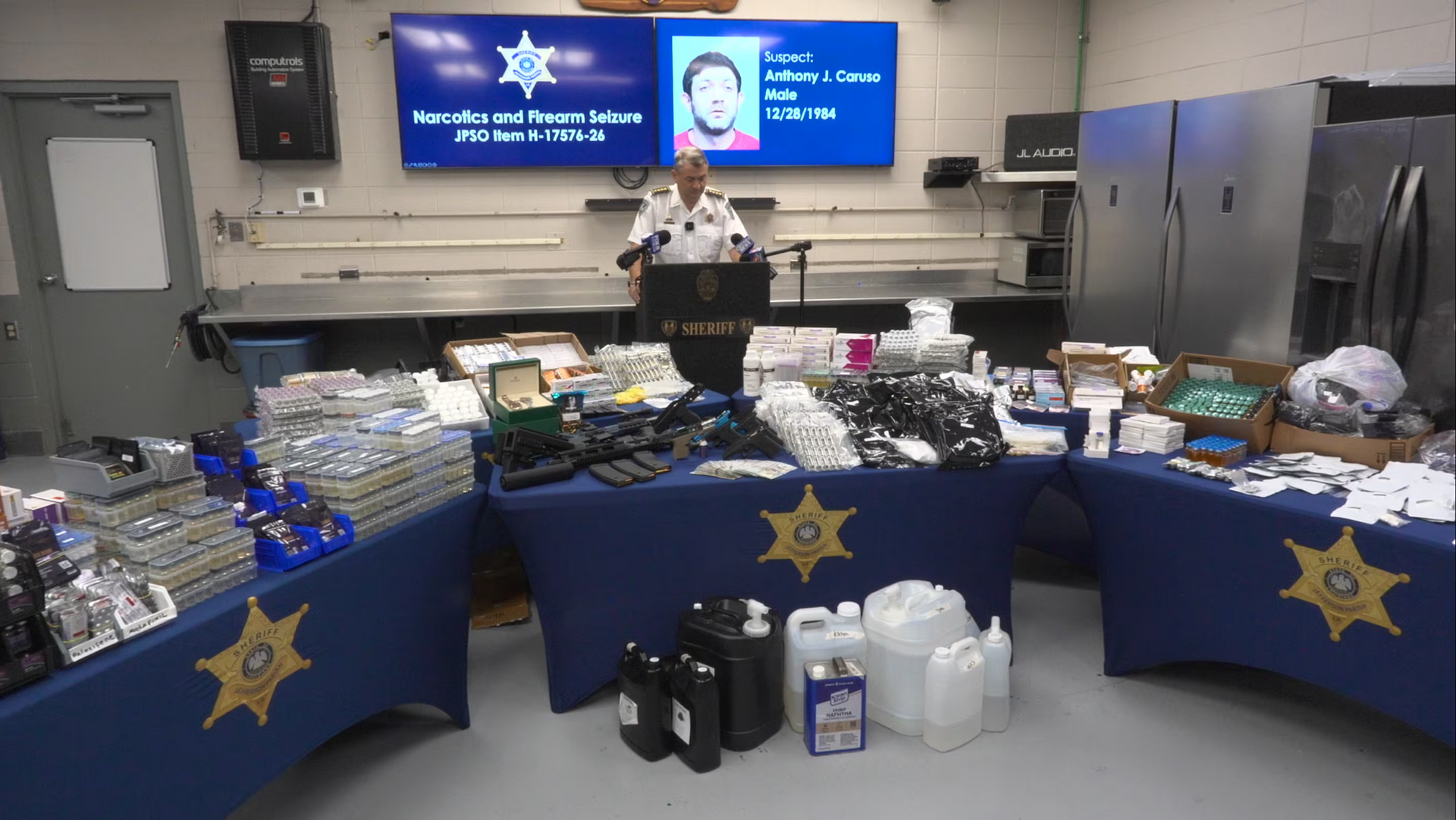
Source: Fox 8 Nola, (https://www.fox8live.com) | Aug. 26, 2026
The short answer: How can you reduce the risk of receiving a counterfeit GLP-1 medication?
Obtain GLP-1 medication only after an evaluation by a licensed healthcare provider and fill the prescription through a verifiable, state-licensed pharmacy. Confirm that your medication has clear labeling, dosing instructions and identifiable pharmacy information. You should also know who to contact about side effects, dose changes and follow-up care.
If a company will sell you prescription medication without a meaningful evaluation or will not clearly identify the dispensing pharmacy, pause before using the product.
Counterfeit medication can look convincing
Many people picture a counterfeit product as something obviously suspicious: a handwritten label, damaged packaging or an unlabeled vial. Unfortunately, counterfeit medications can look professional.
The U.S. Food and Drug Administration has reported fraudulent compounded semaglutide and tirzepatide products containing false information on their labels. In some cases, the pharmacy listed did not exist. In others, the label used the name of a licensed pharmacy that the FDA said did not actually make the product.
That is why appearance alone cannot establish where a medication came from or what it contains.
The FDA explains that counterfeit medicines may contain the wrong ingredient, too much or too little of the intended ingredient, no active ingredient or potentially harmful substances. With an injectable medication, sterility and accurate concentration also matter. A vial may look legitimate while leaving the patient with no reliable way to verify how it was produced, handled or dosed.
Receiving a vial is not the same as receiving medical care
GLP-1 medications are prescriptions, not retail products that should be selected from an online menu without clinical judgment.
Before prescribing, a qualified medical provider should review information such as your health history, current medications, previous treatments, symptoms, goals and individual risk factors. Depending on your circumstances, additional records or testing may be appropriate. The provider should then determine whether treatment is medically appropriate and explain the expected benefits, limitations and risks.
Care should continue after the prescription. Patients may need help managing side effects, understanding dosing, protecting nutrition and muscle mass, or deciding whether a dose should remain the same rather than automatically increasing.
The FDA has received reports of adverse events (some requiring hospitalization) associated with dosing errors involving compounded injectable semaglutide. Reported issues have included patients measuring the wrong amount and confusion created by different concentrations and units. This is another reason why clear instructions and access to a knowledgeable medical team matter.
If no one is meaningfully evaluating you, no one has the full picture needed to prescribe for you responsibly.
What should you know before taking semaglutide or tirzepatide?
Patients should be able to get clear answers to the following questions:
1. Who prescribed the medication?
You should know the name and credentials of the licensed provider responsible for your treatment. A questionnaire can be part of an evaluation, but it should not leave you unsure whether a real provider reviewed your information or how to contact the care team.
2. Was I medically evaluated?
Appropriate treatment is based on more than the medication a patient requests. Your provider should consider your medical history, medication list, contraindications, potential interactions and treatment goals before determining whether a GLP-1 medication is appropriate.
3. Which pharmacy filled the prescription?
The dispensing pharmacy should be identifiable and appropriately licensed. Louisiana patients can use the Louisiana Board of Pharmacy’s credential verification tool to verify pharmacy credentials. The FDA also provides its BeSafeRx resources for evaluating online pharmacies.
4. Is the label complete and consistent?
Review the pharmacy name, patient information, drug name, concentration, directions, date and other identifying information. If a vial arrives without clear labeling, has damaged packaging or does not match what your provider told you to expect, do not use it until you have spoken with the prescribing team and pharmacy.
5. Do I understand exactly how to take it?
With multi-dose vials, terms such as milligrams, milliliters and “units” are not interchangeable. Your care team should clearly explain your prescribed dose, the concentration of your medication and the amount you should draw into the syringe. Never guess or copy another person’s dose.
6. Who is monitoring me?
You should know when follow-up is expected, how dose decisions are made and whom to contact if you experience side effects. A refill should not be the only interaction you have with your medical team.
Red flags when seeking GLP-1 treatment online
Be cautious if a website, seller or program:
- Offers prescription medication without requiring a prescription or meaningful medical review
- Will not identify the prescribing provider or dispensing pharmacy
- Makes it difficult to reach a medical professional
- Guarantees a specific amount of weight loss
- Promises that a higher dose will automatically create faster or better results
- Uses vague terms such as “research use only” while presenting the product for human use
- Sends medication with missing, inconsistent or suspicious labeling
- Offers pricing that seems dramatically lower than legitimate alternatives without explaining why
- Pressures you to purchase before answering basic safety questions
The FDA advises consumers to use pharmacies that require a prescription, provide a physical U.S. address and telephone number, have a licensed pharmacist available and are licensed by a state board of pharmacy.
Are all compounded GLP-1 medications counterfeit?
No. “Compounded” and “counterfeit” do not mean the same thing.
A compounded drug is prepared for a patient under specific legal and clinical circumstances. Compounded medications are not FDA-approved, which means the FDA does not review them for safety, effectiveness and quality before marketing in the same way it reviews an approved medication. Counterfeit drugs, by contrast, are falsely presented as authentic or legitimate.
This distinction matters. Patients should not assume that every compounded prescription is counterfeit, but they also should not assume that every product advertised as “compounded” came from a legitimate pharmacy. Ask why a compounded option is being recommended, which pharmacy will prepare it and whether that pharmacy can be verified.
What responsible GLP-1 care should feel like
Safe medical weight management should feel like healthcare, even when part of it happens virtually.
You should feel that your provider understands your history, explains the treatment plan and makes decisions based on your response rather than a preset dosing schedule. You should be able to ask questions, discuss side effects and receive guidance about nutrition, hydration, movement and preserving muscle during weight loss.
Most importantly, you should never feel as though medication was simply sold to you and you were left to figure out the rest.
Medical weight loss at Chronos in Metairie
At Chronos Body, Health & Wellness, GLP-1 treatment begins with a medical evaluation and continues with provider follow-up, education and ongoing support. Medication is prescribed only when medically appropriate, and our team works with patients to build a plan around their health, not simply around access to a vial.
Our Metairie medical weight-loss program gives local patients a care team they can reach and a place they can walk into. We also provide telehealth care across Louisiana and Texas while maintaining the same belief: virtual healthcare should still feel like healthcare.
Whether you are considering GLP-1 treatment for the first time, currently receiving medication from another source or simply have questions about what safe treatment should include, we are here to help you make an informed decision.
Don’t settle for access alone. Choose medical care you can trust.
Office located in Metairie, LA
Providing virtual care to patients throughout Louisiana and Texas.
Frequently Asked Questions
How can I tell if my GLP-1 medication is counterfeit?
You usually cannot confirm authenticity by appearance alone. Verify the prescribing provider and dispensing pharmacy, review the label for complete and consistent information, and contact the pharmacy directly if anything appears unusual. Do not use an unlabeled or suspicious product until it has been reviewed by your provider and pharmacy.
Is it safe to buy semaglutide or tirzepatide online?
Online access can be legitimate when a licensed healthcare provider performs an appropriate evaluation and the prescription is filled by a verifiable, state-licensed pharmacy. Avoid sellers that do not require a prescription, conceal the pharmacy’s identity or provide no access to a qualified medical professional.
What should be included on a GLP-1 prescription label?
The label should clearly identify the patient, medication, concentration, directions, dispensing pharmacy and other required prescription information. If the label is incomplete, inconsistent with your prescription or names a pharmacy you cannot verify, contact your medical provider and the pharmacy before using the medication.
Why is medical monitoring important during GLP-1 treatment?
Monitoring helps a provider evaluate side effects, nutrition, hydration, dose response, medication interactions and overall progress. It also gives patients a reliable place to ask questions before changing a dose or responding to a new symptom.
Where can Louisiana patients verify a pharmacy?
Louisiana patients can search pharmacy credentials through the Louisiana Board of Pharmacy. The FDA’s BeSafeRx program also links consumers to state pharmacy-license databases and explains the warning signs of unsafe online pharmacies.
Written by Mace Scott, MD
Founder and Medical Director at Chronos Body Health & Wellness
Focus: medical weight loss, hormone optimization, wellness medicine, aesthetics
Updated: August 2026