

What Is Retatrutide? Weight Loss Research, FDA Status, and What Patients Should Know
mportant: Retatrutide is an investigational medication that is currently in Phase 3 clinical trials and has not been approved by the U.S. Food and Drug Administration (FDA). This article is intended for educational purposes and should not replace individualized medical advice. Our providers discuss the current evidence, potential benefits, risks, and investigational status of Retatrutide during your consultation.
What Is Retatrutide?
If you've been following developments in weight loss medicine, you've probably heard increasing discussion about a medication called Retatrutide.
Many people are searching for answers about what Retatrutide is, how it works, and whether it may eventually become another option for weight management.
As a physician who has spent years helping patients improve their health through evidence-based weight loss treatments, I believe it's important to separate the headlines from the science.
While Retatrutide is generating significant attention due to promising clinical trial results, it is important to understand that it remains an investigational medication and is not currently FDA-approved.
Here's what patients should know.
How Does Retatrutide Work?
Retatrutide is a medication being developed by Eli Lilly that belongs to a newer generation of obesity treatments known as triple hormone receptor agonists.
Most people are familiar with medications such as semaglutide and tirzepatide. These medications work by targeting hormones involved in appetite regulation, blood sugar control, and metabolism.
Retatrutide takes a different approach by activating three hormone pathways:
- GLP-1 (Glucagon-Like Peptide-1)
- GIP (Glucose-Dependent Insulinotropic Polypeptide)
- Glucagon Receptors
Researchers believe this three-pronged approach may influence:
- Appetite control
- Feelings of fullness
- Energy expenditure
- Blood sugar regulation
- Fat metabolism
Because of these mechanisms, Retatrutide has become one of the most closely watched investigational medications in obesity medicine.
Why Is Retatrutide Getting So Much Attention?
The excitement surrounding Retatrutide comes largely from early clinical trial data that demonstrated substantial weight loss among study participants.
In clinical research, participants receiving higher doses of Retatrutide experienced significant reductions in body weight over the course of treatment.
While these results have generated enthusiasm among researchers and healthcare professionals, it's important to remember that clinical trial outcomes do not guarantee individual results in real-world settings.
Additional research is still underway to better understand long-term safety, effectiveness, and patient outcomes.
Is Retatrutide FDA Approved?
No.
Retatrutide is not currently FDA-approved for weight loss, diabetes treatment, or any other medical indication.
The medication remains under investigation in Phase 3 clinical trials, which are designed to evaluate both safety and effectiveness in larger patient populations.
Until the FDA completes its review process and grants approval, Retatrutide is not considered an approved treatment option.
Patients should be cautious of any website or advertisement suggesting otherwise.
Can You Get Retatrutide Right Now?
At this time, Retatrutide is generally only available through approved clinical research studies.
Because it has not received FDA approval, physicians cannot prescribe Retatrutide as an approved medication for weight loss treatment.
If you're interested in medical weight loss, there are currently FDA-approved and physician-supervised options available that have already demonstrated effectiveness for many patients.
Retatrutide vs. Semaglutide and Tirzepatide
One of the most common questions patients ask is how Retatrutide compares to medications such as semaglutide and tirzepatide.
Here's a simplified overview:
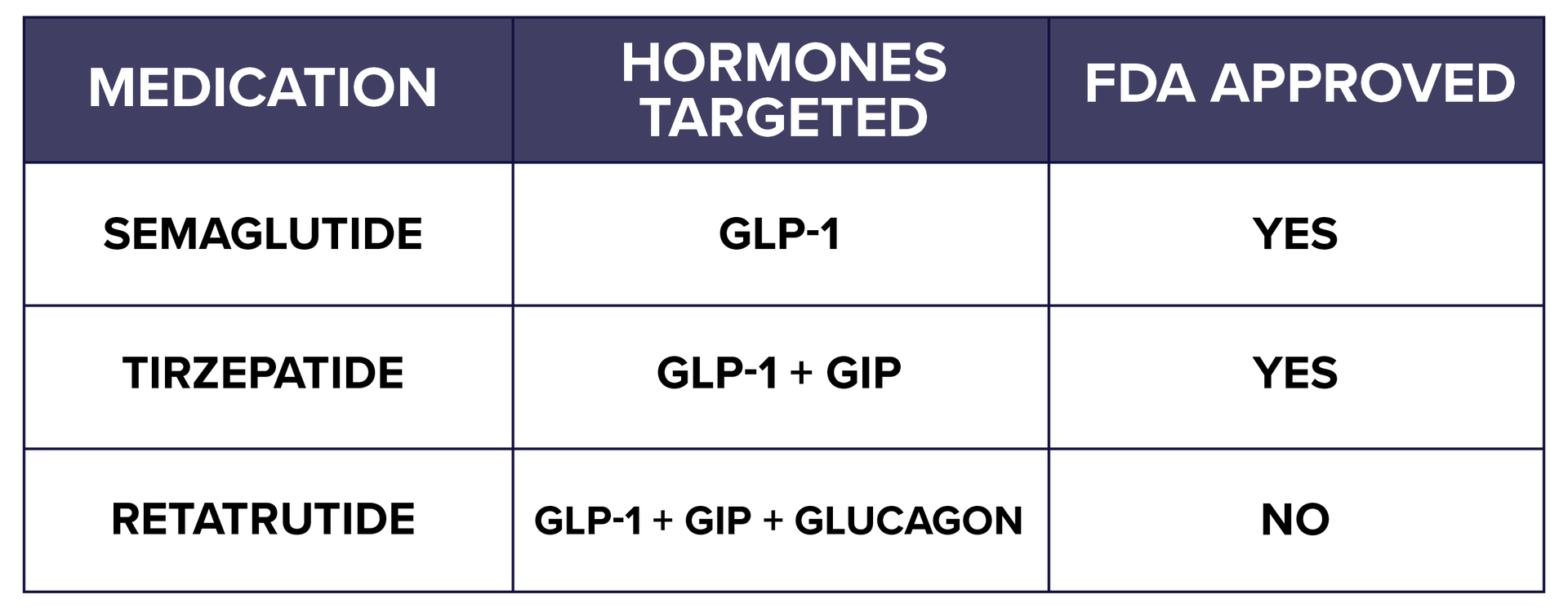
Because Retatrutide activates an additional hormone pathway, researchers are studying whether it may offer unique metabolic benefits compared to currently available medications.
However, until clinical trials are complete and regulatory review has occurred, direct comparisons remain limited.
What Are the Potential Side Effects of Retatrutide?
Like many medications that affect appetite and digestion, the most commonly reported side effects in clinical studies have involved the gastrointestinal system.
Reported side effects have included:
- Nausea
- Vomiting
- Diarrhea
- Constipation
- Abdominal discomfort
Researchers continue to evaluate the medication's long-term safety profile.
This ongoing evaluation is one of the primary reasons FDA approval has not yet been granted.
When Could Retatrutide Become Approved?
At this time, there is no official FDA approval date for Retatrutide.
The approval process depends on several factors, including:
- Completion of Phase 3 clinical trials
- Safety data review
- Effectiveness outcomes
- Regulatory evaluation by the FDA
Until those steps are completed, any timeline remains speculative.
Patients should be cautious about websites claiming specific approval dates.
What Should Patients Do Now?
While many people are understandably interested in emerging therapies like Retatrutide, it's important not to overlook the effective treatments that are already available today.
Successful weight loss is rarely about finding a "magic medication."
The best outcomes typically come from a comprehensive approach that includes:
- Medical supervision
- Lifestyle modification
- Nutrition support
- Physical activity
- Long-term follow-up care
At Chronos Body Health & Wellness, we focus on evidence-based weight loss strategies tailored to each patient's individual goals, health history, and needs.
Frequently Asked Questions About Retatrutide
What is Retatrutide?
Retatrutide is an investigational medication being studied for weight management and metabolic health. It works by targeting three hormone pathways involved in appetite, metabolism, and blood sugar regulation.
Is Retatrutide FDA-approved?
No. Retatrutide has not received FDA approval and remains under investigation in clinical trials.
Can doctors prescribe Retatrutide?
Because Retatrutide is not FDA-approved, it is generally not available as a standard prescription medication.
How does Retatrutide differ from Tirzepatide?
Tirzepatide targets GLP-1 and GIP receptors, while Retatrutide targets GLP-1, GIP, and glucagon receptors.
Is Retatrutide available in Louisiana?
Retatrutide is not currently FDA-approved and remains under investigation in clinical trials. As with any investigational medication, patients should understand both the potential benefits and limitations of the currently available research.
Will Retatrutide replace current GLP-1 medications?
It's too early to know. Researchers are still evaluating Retatrutide's long-term safety and effectiveness before any conclusions can be made.
Final Thoughts from Dr. Scott
The field of obesity medicine continues to evolve rapidly, and Retatrutide represents one of several promising therapies currently being studied.
As exciting as new research can be, my advice to patients remains the same: focus on proven, evidence-based treatment options that are available today while staying informed about future developments.
The goal isn't simply losing weight. It's improving overall health, reducing disease risk, and creating sustainable results that last.
If you're interested in learning more about physician-supervised weight loss options, our team is here to help guide you through the choices currently available and determine the approach that makes the most sense for your goals.
Written by Mace Scott, MD
Founder and Medical Director at Chronos Body Health & Wellness
Focus: medical weight loss, hormone optimization, wellness medicine, aesthetics
Updated: June 2026