
How Often Should You Get Botox or Dysport? An Injector's Guide to Natural-Looking Results
One of the most common questions I hear during consultations is:
"How often should I get Botox?"
The short answer?
It depends.
While many people have heard that Botox® or Dysport® should be repeated every three to four months, there isn't a one-size-fits-all schedule that works for everyone.
The right timing depends on your muscles, your facial anatomy, your treatment goals, and how your body responds to the medication.
As an injector, my goal isn't simply to keep you on a schedule. It's to help you achieve natural, consistent results while using the right amount of product at the right time.
Let's talk about how that works.
First, How Do Botox and Dysport Work?
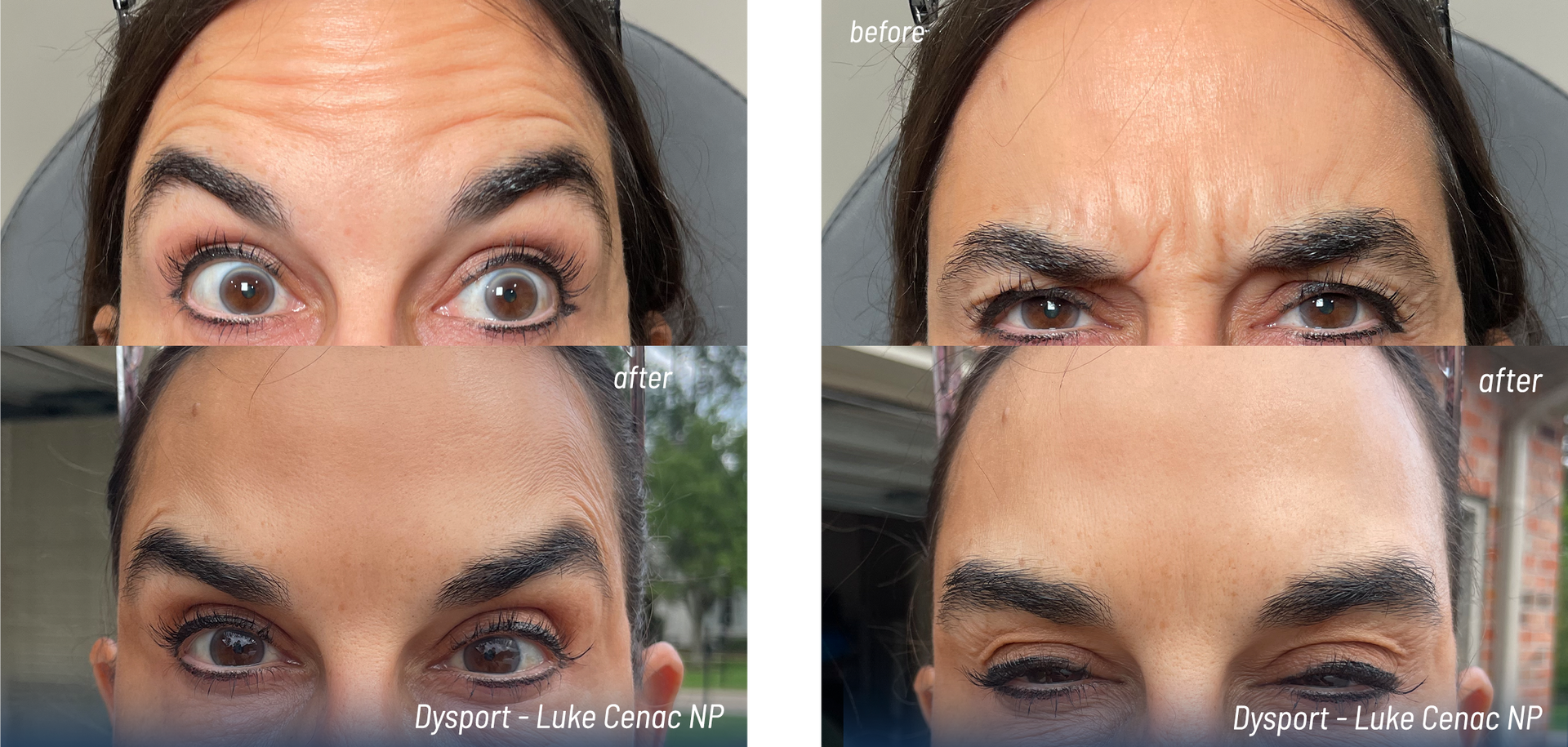
Botox and Dysport are FDA-approved neuromodulators that temporarily relax the muscles responsible for dynamic wrinkles (the lines that form when you make facial expressions).
These commonly include:
- Forehead lines
- Frown lines (the "11s")
- Crow's feet
By reducing repeated muscle movement, these treatments soften existing expression lines while also helping prevent them from becoming deeper over time.
The medication doesn't fill wrinkles. It simply decreases the muscle activity that causes them.
How Long Do Botox and Dysport Last?
For most patients, results typically last about three to four months.
However, that timeframe can vary.
Some patients notice movement returning closer to two and a half months, while others maintain beautiful results for four months or even longer.
Several factors influence longevity, including:
- Your individual metabolism
- Muscle strength
- The treatment area
- The amount of product used
- Your facial anatomy
- Whether you're new to treatment or have been receiving injections consistently
Every patient is different, which is why treatment should always be personalized.
More Important Than the Calendar: Watch Your Muscles
One of the biggest misconceptions is that everyone should schedule injections exactly every three months.
In reality, I encourage patients to pay attention to their movement, not the calendar.
As your treatment gradually wears off, you may begin noticing:
- Your frown muscles becoming more active
- Forehead movement returning
- Crow's feet appearing more prominently when smiling
- Fine lines becoming easier to see with facial expressions
This doesn't mean you've "lost" all of your results overnight.
Botox and Dysport wear off gradually, allowing muscle activity to slowly return.
Rather than chasing a specific date, we evaluate how your muscles are behaving and whether it's the right time to retreat.
Can You Wait Too Long Between Treatments?
You can.
Waiting longer isn't unsafe, but allowing muscles to fully regain their previous strength means they'll continue making the repetitive expressions that contribute to wrinkle formation.
For patients hoping to maintain smoother skin or prevent lines from becoming more noticeable over time, consistent maintenance often provides the best long-term results.
That doesn't mean everyone needs treatment every three months. It simply means consistency matters more than waiting until everything has completely worn off.
Can You Get Botox or Dysport Too Often?
This is another question I hear frequently.
In general, treatments should not be repeated too soon.
Most injectors recommend waiting at least 12 weeks between treatments in the same area unless your provider recommends otherwise.
Treating too frequently generally doesn't produce better results and may increase the risk of developing resistance over time.
At Chronos, we don't recommend unnecessary treatments simply because someone wants an earlier appointment.
Our focus is providing treatment when it's medically appropriate, not before.
Does Botox Last Longer Over Time?
Many patients feel that it does.
While everyone's experience is different, consistent treatments may gradually "train" certain facial muscles to become less active.
As stronger muscles become accustomed to moving less, some patients find they can maintain excellent results with the same schedule. Or in some cases, even extend the time between appointments.
This varies from person to person and shouldn't be expected as a guarantee, but it's something we often discuss during follow-up visits.
What About Preventative Botox?
Preventative Botox has become increasingly popular, especially among younger adults.
The idea isn't to freeze your face before wrinkles appear.
Instead, it's to reduce the repetitive muscle movements that eventually create deeper expression lines.
Not everyone needs preventative treatment.
The decision depends on:
- Your facial anatomy
- Muscle activity
- Family history
- Skin quality
- Personal goals
A consultation allows us to determine whether preventative treatment is appropriate, or whether waiting is the better option.
Natural Results Start With Individualized Treatment
One of the biggest misconceptions about Botox and Dysport is that everyone should receive the same number of units.
That's simply not how facial anatomy works.
Every face is different.
Some patients have naturally stronger forehead muscles. Others have very expressive brows or stronger frown muscles.
My job as an injector isn't to follow a formula. It's to evaluate how your muscles move and customize treatment accordingly.
Natural-looking results come from understanding facial anatomy, preserving appropriate movement, and creating balance, not from chasing a certain number of units.
Signs It May Be Time for Your Next Appointment
Rather than scheduling based only on the calendar, consider whether you've started noticing:
- Increased movement in previously treated areas
- Expression lines becoming more visible
- Makeup settling into dynamic lines again
- A gradual return of muscle strength
If you're unsure whether it's time, your injector can evaluate your results and help determine the most appropriate timing.
The Chronos Approach
At Chronos Body Health & Wellness, we believe injectable treatments should always be personalized.
During your consultation, we evaluate your facial anatomy, muscle movement, treatment history, and aesthetic goals before recommending a plan.
Our philosophy isn't to make every patient look the same.
It's to help you look refreshed, natural, and like the best version of yourself.
Whether you're considering your very first Botox or Dysport treatment or you've been receiving injections for years, we take the time to educate you, answer your questions, and create a treatment plan designed specifically for you.
Because great injectables shouldn't make people wonder what you've had done.
They should simply have people telling you that you look well-rested.
Frequently Asked Questions
How often should you get Botox?
Most people benefit from treatment every 3 to 4 months, but the ideal timing depends on your muscle activity, treatment goals, and how your body responds. Your injector can help determine the best maintenance schedule for you.
How often should you get Dysport?
Dysport generally lasts about 3 to 4 months, similar to Botox, although individual results vary. Treatment timing should be based on your muscle movement rather than a fixed calendar schedule.
Can Botox stop working?
In some cases, patients may notice Botox becoming less effective over time, but true resistance is uncommon. Proper dosing and allowing adequate time between treatments may help reduce this risk.
Is it better to wait until Botox completely wears off?
Not necessarily. Many patients achieve the most consistent results by returning when muscle movement begins to gradually return rather than waiting until all movement has fully returned.
Is Dysport better than Botox?
Both Botox and Dysport are FDA-approved neuromodulators that effectively treat dynamic wrinkles. The best choice depends on your anatomy, treatment goals, and your injector's clinical judgment. During your consultation, we'll discuss which option is most appropriate for you.
Written by Amanda Rodriguez NP
Aesthetic Injector/Nurse Practitioner | Chronos Body Health & Wellness
Focused on natural aesthetics and long-term wellness goals
Updated: August 2026