
GLP-1 Weight Loss Medications Explained: Semaglutide vs. Tirzepatide vs. Retatrutide
There Isn't One "Best" GLP-1 Medication—Only the Best One for You
If you've been researching weight loss medications, you've probably come across names like semaglutide, tirzepatide, and retatrutide.
They're often compared online as if they're competing products—but the reality is much more nuanced.
Each medication works differently, targets different metabolic pathways, and may be more appropriate depending on your health history, weight loss goals, medical conditions, and previous treatment experience.
At Chronos Body, Health & Wellness, our providers don't believe in a one-size-fits-all approach. Instead, we evaluate your medical history, lifestyle, and long-term goals to determine which treatment makes the most sense for you.
Understanding how these medications differ can help you have a more informed conversation with your provider.
What Are GLP-1 Medications?
GLP-1 stands for glucagon-like peptide-1, a hormone your body naturally produces after eating.
It helps regulate several processes involved in metabolism, including:
- appetite
- fullness
- blood sugar
- insulin release
- stomach emptying
GLP-1 medications work by mimicking or enhancing these natural signals.
For many patients, this leads to:
- reduced hunger
- fewer cravings
- feeling full longer
- improved blood sugar regulation
- easier calorie reduction without constant hunger
Originally developed to treat type 2 diabetes, several GLP-1 medications are now FDA-approved for chronic weight management, while others continue to be studied in clinical trials.
Why Are There Different GLP-1 Medications?
Although people often refer to them all as "GLP-1s," they don't all work the same way.
Think of them as different generations of metabolic therapies.
Each newer medication activates additional hormone receptors that influence how the body regulates weight and energy.
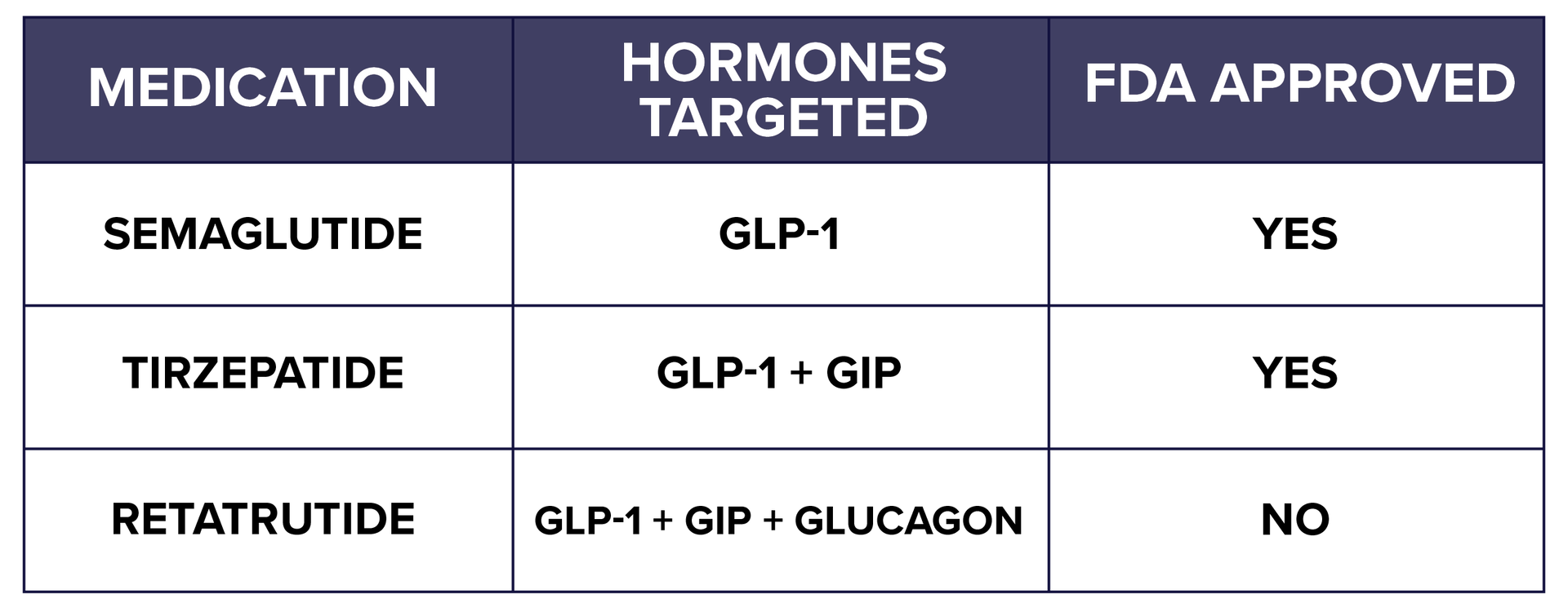
*Retatrutide is currently in Phase 3 of approval*
The more receptors involved doesn't automatically mean a medication is "better."
It simply means it works through additional biological pathways that may be beneficial for certain patients.
Semaglutide: The Medication That Changed Weight Loss
Semaglutide was one of the first medications to dramatically change obesity treatment.
It primarily activates the GLP-1 receptor, helping patients naturally eat less without relying solely on willpower.
Benefits
- Extensive clinical research
- Well-established safety profile
- FDA approved for chronic weight management
- Effective appetite reduction
- Weekly dosing
Semaglutide remains an excellent first-line option for many patients beginning medical weight loss.
Tirzepatide: Adding a Second Metabolic Pathway
Tirzepatide builds upon semaglutide by activating both:
- GLP-1
- GIP (glucose-dependent insulinotropic polypeptide)
Researchers believe activating both receptors may enhance metabolic regulation in some individuals.
Compared with GLP-1 alone, dual agonism may provide:
- greater appetite reduction for some patients
- improved insulin sensitivity
- additional metabolic benefits
Clinical trials demonstrated substantial weight loss in many patients using tirzepatide for obesity management.
Retatrutide: The Next Generation
Retatrutide represents one of the newest developments in obesity medicine.
Unlike semaglutide or tirzepatide, it activates three receptors:
- GLP-1
- GIP
- glucagon
Researchers believe activating the glucagon receptor may increase energy expenditure in addition to appetite regulation.
Early clinical trials have shown promising weight-loss results, but it's important to understand that retatrutide remains investigational and has not yet received FDA approval.
Is Retatrutide Better?
This is one of the most common questions patients ask.
The honest answer is:
We don't know yet.
While retatrutide has produced impressive results in early studies, those studies were not direct head-to-head comparisons with semaglutide or tirzepatide. Differences in study design, patient populations, treatment duration, and dosing make simple percentage comparisons misleading.
Which Medication Is Right for You?
Rather than asking which medication is "strongest," providers consider questions like:
- Have you previously taken a GLP-1 medication?
- How much weight are you hoping to lose?
- Do you have diabetes or insulin resistance?
- Have you experienced side effects with previous medications?
- What does your medical history look like?
- What treatment has the best balance of benefits and risks for your individual situation?
These factors help determine the most appropriate option—not internet rankings or social media trends.
Common Side Effects
Most GLP-1 medications share similar side effects because they affect digestion.
These may include:
- nausea
- constipation
- diarrhea
- vomiting
- decreased appetite
- stomach discomfort
Many side effects improve over time, especially when medications are started at lower doses and gradually increased under medical supervision.
Do You Have to Stay on a GLP-1 Forever?
Not necessarily.
Some patients remain on treatment long term, while others transition to maintenance strategies that emphasize nutrition, exercise, strength training, and healthy lifestyle habits.
Successful long-term weight management isn't just about medication—it's about building sustainable habits that help maintain results after weight loss.
Why Choosing the Right Medical Team Matters
Weight loss medication is only one piece of the equation.
The most successful programs include:
- comprehensive medical evaluation
- individualized treatment plans
- ongoing provider follow-up
- medication adjustments when needed
- nutrition guidance
- exercise recommendations
- accountability and support
At Chronos Body, Health & Wellness, patients work with experienced medical providers who monitor progress and personalize treatment over time rather than relying on a standardized online questionnaire.
Frequently Asked Questions
Is semaglutide better than tirzepatide?
Not necessarily. Both are effective medications, but they work differently. Your provider can help determine which is most appropriate based on your medical history and goals.
Is retatrutide FDA approved?
No. Retatrutide is currently being studied in Phase 3 clinical trials and has not received FDA approval yet.
Which GLP-1 medication causes the least side effects?
Side effects vary by individual. Many patients tolerate these medications well with gradual dose escalation and close medical supervision.
Can I switch from semaglutide to tirzepatide?
Some patients do transition between medications, but this decision should always be made with guidance from a qualified medical provider.
Which medication helps patients lose the most weight?
Clinical trials have shown meaningful weight loss with semaglutide and tirzepatide, while early retatrutide studies have been promising. However, because these studies were not direct comparisons, it's not appropriate to declare one medication universally superior.
The Bottom Line
Semaglutide, tirzepatide, and retatrutide all represent major advances in obesity medicine, but they are not interchangeable.
Each medication works through different metabolic pathways and may be appropriate for different patients.
The best treatment isn't simply the newest medication. It's the one that aligns with your health history, goals, and long-term success.
At Chronos Body, Health & Wellness, our providers take an individualized, evidence-based approach to medical weight loss, helping patients understand their options and build sustainable plans for lasting results.
Written by Mace Scott, MD
Founder and Medical Director at Chronos Body Health & Wellness
Focus: medical weight loss, hormone optimization, wellness medicine, aesthetics
Updated: June 2026